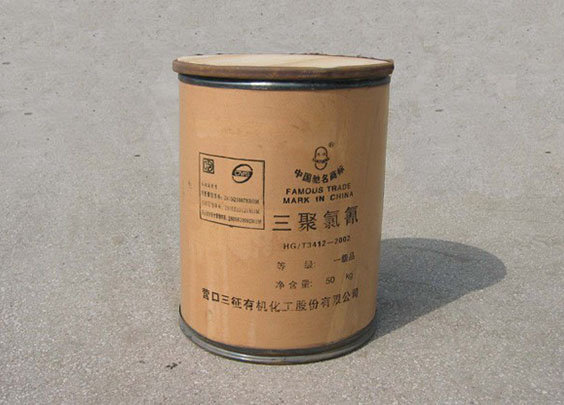
The production of cyanuric chloride usually consists of two processes: the preparation of cyanuric chloride and the polymerization of cyanuric chloride. There are many methods to generate cyanogen chloride, such as the synthesis of methyl thiocyanate and chlorine, the synthesis of hydrogen cyanide dissolved in chloroform and chlorine gas, the hydrocyanic acid method, the sodium cyanide method, the urea method, and the hydrocyanic acid method. Direct chlorocyanation with chlorine, etc. At present, the industrial production of cyanuric chloride generally uses two methods of sodium cyanide and hydrocyanic acid as raw materials. 1. Sodium cyanide method Use sodium cyanide as a raw material to react with chlorine to produce cyanuric chloride, and then polymerize to produce cyanuric chloride. The product is obtained by quenching and crystallization. Raw material consumption quota: 1073kg/t of sodium cyanide and 1700kg/t of chlorine. 2. Hydrocyanic acid method: Hydrocyanic acid is used as raw material to react with chlorine gas to generate cyanuric chloride, then polymerize to generate cyanuric chloride, and the product is obtained by quenching and crystallization. Raw material consumption quota: 500kg/t of hydrocyanic acid, 1200kg/t of chlorine.